Days with extreme heat have become less frequent in Maine over the period of record, while average overall temperature has only modestly increased.
Precipitation has improved over time, with less drought.
Wildfires have not become more frequent or severe.
Sea level rise in Maine is lower than the global average.
Maine’s major crops have experienced substantial growth in yields and production.
Short Summary:
Temperature Trends:
Maine is dominated by a humid continental climate, according to Köppen Classification, with mild summers and cold winters.1
Like other East Coast states, Maine has seen an increase in average temperatures of approximately 3.5°F since 1900. Notably, the Little Ice Age, which brought the coldest temperatures of the past 10,000 years, also ended around 1900. This recent temperature recovery has brought modest increases in both average summer and winter temperatures.2
Maine population growth in recent years has produced a modest urban heat island (UHI) effect. The UHI effect occurs when the growth of urban centers increases surfaces like concrete and metal, which heat up more than natural surfaces during the day and release the absorbed heat after the sun sets, thereby artificially increasing local temperatures.3
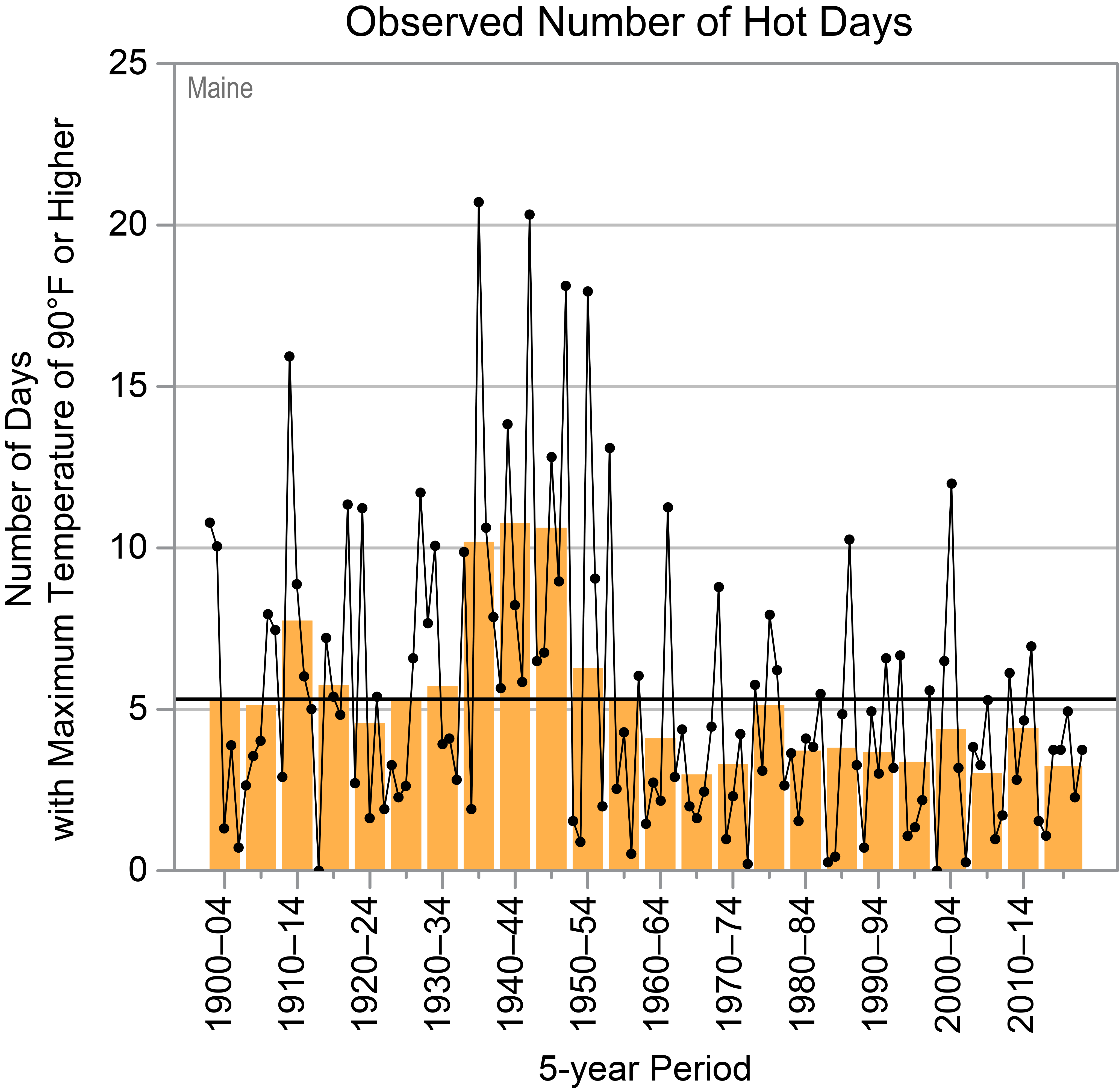
At the same time, the frequency of hot days (maximum temperatures of 90°F or higher) has declined over the same period, especially since the 1930s. The frequency of very cold nights in the winter has declined as well.4(See Figure 1, below). Based on the data, Maine’s climate is becoming less extreme.
Figure 1: Observed number of very hot days in Maine since 1900. Dots are annual values. Orange bars show averages over a 5-year period, the last bar is a 6-year average. The horizontal black line shows the average of the entire period. Chart Source: Runkle, J., et al. Maine State Climate Summary 2022.
The decline in extreme cold is a positive development for human health and safety because cold temperatures kill far more people per year than heat does.5
Precipitation:
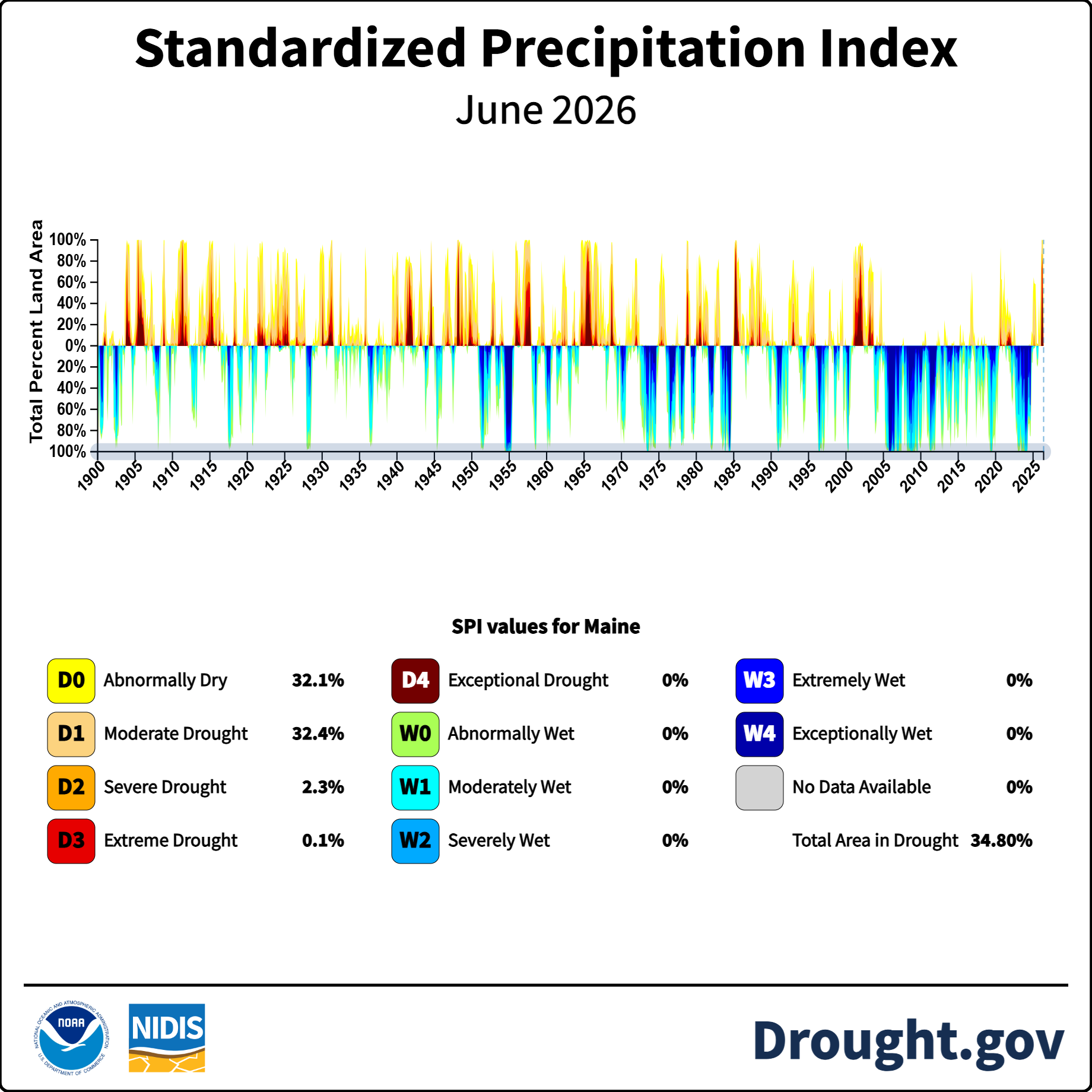
Precipitation varies widely from year to year but has modestly increased on average since 1900.6 As a result, historical precipitation data for Maine shows that the state has experienced less frequent and severe drought than in previous decades before global warming became a concern.7 (See Figure 2, below).
Figure 2: Standardized Precipitation Index for Maine, February 1900-June 2026. Chart from National Integrated Drought Information System Historical Data and Conditions page, data from NOAA’s National Centers for Environmental Information.
State-Specific Issues:
Wildfires
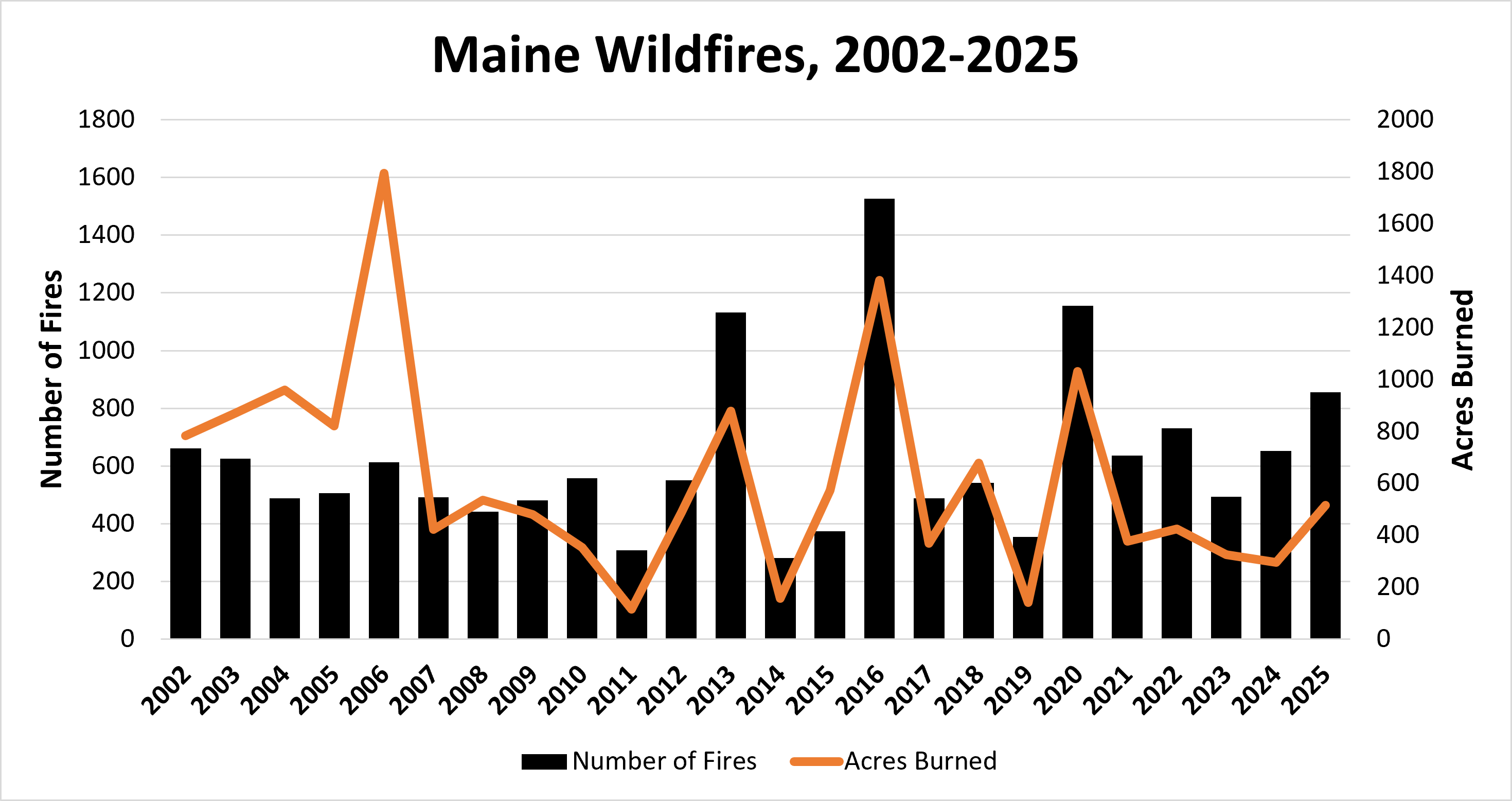
Wildfires are a natural part of Maine’s environment, especially woodland fires. Data show no trend for wildfire occurrence since 2002, when consistent record keeping began with the National Interagency Coordination Center. 8(See Figure 3, below).
Figure 3: Wildfire number and acreage burned in Maine 2002-2025. Data from the National Interagency Coordination Center.
Sea Level Rise
Maine has seen relative sea level rise ranging from 1.97mm/year (0.08 in/yr) to 2.48mm/year (0.09 in/yr) depending on the tide gauge station, which is lower than the global average.9,10 This equates to approximately eight to nine inches over the next 100 years, which is consistent with global sea level rise during the past two centuries and to which humans can easily adapt.
Agriculture:
Potatoes, wild blueberries, and maple syrup are among Maine’s primary agricultural products.
Since 1900, Maine’s potato production has risen 202 percent, even after dipping significantly after fewer were planted in the 1950s due to pressures from cheaper Idaho potatoes. Over the same period, yields rose 340 percent, meaning more potatoes are being produced on less acreage.11
Maine produces more wild blueberries than any other state. Data going back to 2007 show significant swings between high and low production years—as would be expected from wild-grown fruit. However, records for both yields and production were set in 2021.12
As for maple syrup, since 1992, Maine maple syrup production has increased by 318 percent, and yield data going back to 2001 show yields per tap have tripled over that time.13
Conclusion:
Data indicate Maine is benefiting from modest warming and climate change rather than being harmed. Maine has experienced rising agricultural yields amid improving precipitation and has experienced no increase in wildfires. Sea level rise is slow and manageable, and extreme temperatures, both hot and cold, are not increasing.
Days with extreme heat have become less frequent in Maine over the period of record, while average overall temperature has only modestly increased.
Precipitation has improved over time, with less drought.
Wildfires have not become more frequent or severe.
Sea level rise in Maine is lower than the global average.
Maine’s major crops have experienced substantial growth in yields and production.
Short Summary:
Temperature Trends:
Maine is dominated by a humid continental climate, according to Köppen Classification, with mild summers and cold winters.1
Like other East Coast states, Maine has seen an increase in average temperatures of approximately 3.5°F since 1900. Notably, the Little Ice Age, which brought the coldest temperatures of the past 10,000 years, also ended around 1900. This recent temperature recovery has brought modest increases in both average summer and winter temperatures.2
Maine population growth in recent years has produced a modest urban heat island (UHI) effect. The UHI effect occurs when the growth of urban centers increases surfaces like concrete and metal, which heat up more than natural surfaces during the day and release the absorbed heat after the sun sets, thereby artificially increasing local temperatures.3
At the same time, the frequency of hot days (maximum temperatures of 90°F or higher) has declined over the same period, especially since the 1930s. The frequency of very cold nights in the winter has declined as well.4(See Figure 1, below). Based on the data, Maine’s climate is becoming less extreme.
Figure 1: Observed number of very hot days in Maine since 1900. Dots are annual values. Orange bars show averages over a 5-year period, the last bar is a 6-year average. The horizontal black line shows the average of the entire period. Chart Source: Runkle, J., et al. Maine State Climate Summary 2022.
The decline in extreme cold is a positive development for human health and safety because cold temperatures kill far more people per year than heat does.5
Precipitation:
Precipitation varies widely from year to year but has modestly increased on average since 1900.6 As a result, historical precipitation data for Maine shows that the state has experienced less frequent and severe drought than in previous decades before global warming became a concern.7 (See Figure 2, below).
Figure 2: Standardized Precipitation Index for Maine, February 1900-June 2026. Chart from National Integrated Drought Information System Historical Data and Conditions page, data from NOAA’s National Centers for Environmental Information.
State-Specific Issues:
Wildfires
Wildfires are a natural part of Maine’s environment, especially woodland fires. Data show no trend for wildfire occurrence since 2002, when consistent record keeping began with the National Interagency Coordination Center. 8(See Figure 3, below).
Figure 3: Wildfire number and acreage burned in Maine 2002-2025. Data from the National Interagency Coordination Center.
Sea Level Rise
Maine has seen relative sea level rise ranging from 1.97mm/year (0.08 in/yr) to 2.48mm/year (0.09 in/yr) depending on the tide gauge station, which is lower than the global average.9,10 This equates to approximately eight to nine inches over the next 100 years, which is consistent with global sea level rise during the past two centuries and to which humans can easily adapt.
Agriculture:
Potatoes, wild blueberries, and maple syrup are among Maine’s primary agricultural products.
Since 1900, Maine’s potato production has risen 202 percent, even after dipping significantly after fewer were planted in the 1950s due to pressures from cheaper Idaho potatoes. Over the same period, yields rose 340 percent, meaning more potatoes are being produced on less acreage.11
Maine produces more wild blueberries than any other state. Data going back to 2007 show significant swings between high and low production years—as would be expected from wild-grown fruit. However, records for both yields and production were set in 2021.12
As for maple syrup, since 1992, Maine maple syrup production has increased by 318 percent, and yield data going back to 2001 show yields per tap have tripled over that time.13
Conclusion:
Data indicate Maine is benefiting from modest warming and climate change rather than being harmed. Maine has experienced rising agricultural yields amid improving precipitation and has experienced no increase in wildfires. Sea level rise is slow and manageable, and extreme temperatures, both hot and cold, are not increasing.
We use cookies to ensure that we give you the best experience on our website. If you continue to use this site we will assume that you are happy with it.